



How to Classify a Startup: SaaS vs. B2B vs. B2C Explained
You have a pitch deck, an accelerator form or a pricing page to finish, and one box asks for your business model: SaaS, B2B or B2C? Those three labels answer two different questions. SaaS describes...

You have a pitch deck, an accelerator form or a pricing page to finish, and one box asks for your business model: SaaS, B2B or B2C? Those three labels answer two different questions. SaaS describes how you deliver and charge for software, and B2B or B2C describes who pays for it, so you classify a startup as SaaS, B2B or B2C by answering both. A team chat tool billed per seat is B2B SaaS. A language app sold to individuals by subscription is B2C SaaS.
Table Of Content
- What Do SaaS, B2B and B2C Actually Mean?
- SaaS Is How You Deliver and Charge
- B2B and B2C Are About Who Pays
- How to Classify a Startup as SaaS, B2B or B2C in 3 Questions
- Question 1: Who Pays for the Product?
- Question 2: Who Uses It Day to Day?
- Question 3: How Do You Deliver and Charge?
- How to Classify Startup SaaS vs B2B vs B2C: The Cheat Sheet
- B2B SaaS vs B2C SaaS: What Changes Once You Know Your Type?
- What About Hybrid Models Like B2B2C and Prosumer?
- B2B2C
- Prosumer and Bottom-Up SaaS
- Selling to Both Markets
- Is It SaaS, a Marketplace or E-commerce?
- Real Examples: How 12 Well-Known Companies Are Classified
- B2B vs B2C vs C2C vs D2C: How Do They Differ?
- Why Getting Your Startup Classification Right Pays Off
- Conclusion
- Frequently Asked Questions
- Q. Is SaaS considered B2B?
- Q. Is Netflix a B2C SaaS?
- Q. Is ChatGPT considered SaaS?
- Q. What is the 3 3 2 2 2 rule of SaaS?
- Q. Can a startup be both B2B and B2C?
- Q. Is every subscription business SaaS?
- Q. Is Shopify B2B or B2C?
- Q. What is a prosumer SaaS company?
Below, Techneo shows how to classify startup SaaS vs B2B vs B2C models with a 3-question method, a cheat sheet, 12 classified companies and the hybrid cases that trip founders up. Pick the wrong label and you chase the wrong buyer with the wrong price.
Quick answer: Ask two questions. Who pays? A business means B2B, an individual means B2C, and a business paying so its customers can use the product means B2B2C. How do you charge? A recurring subscription for hosted software means SaaS. A startup can be B2B SaaS, B2C SaaS or neither.
Every company example below was checked against that company’s own plans or pricing in November 2026.
What Do SaaS, B2B and B2C Actually Mean?
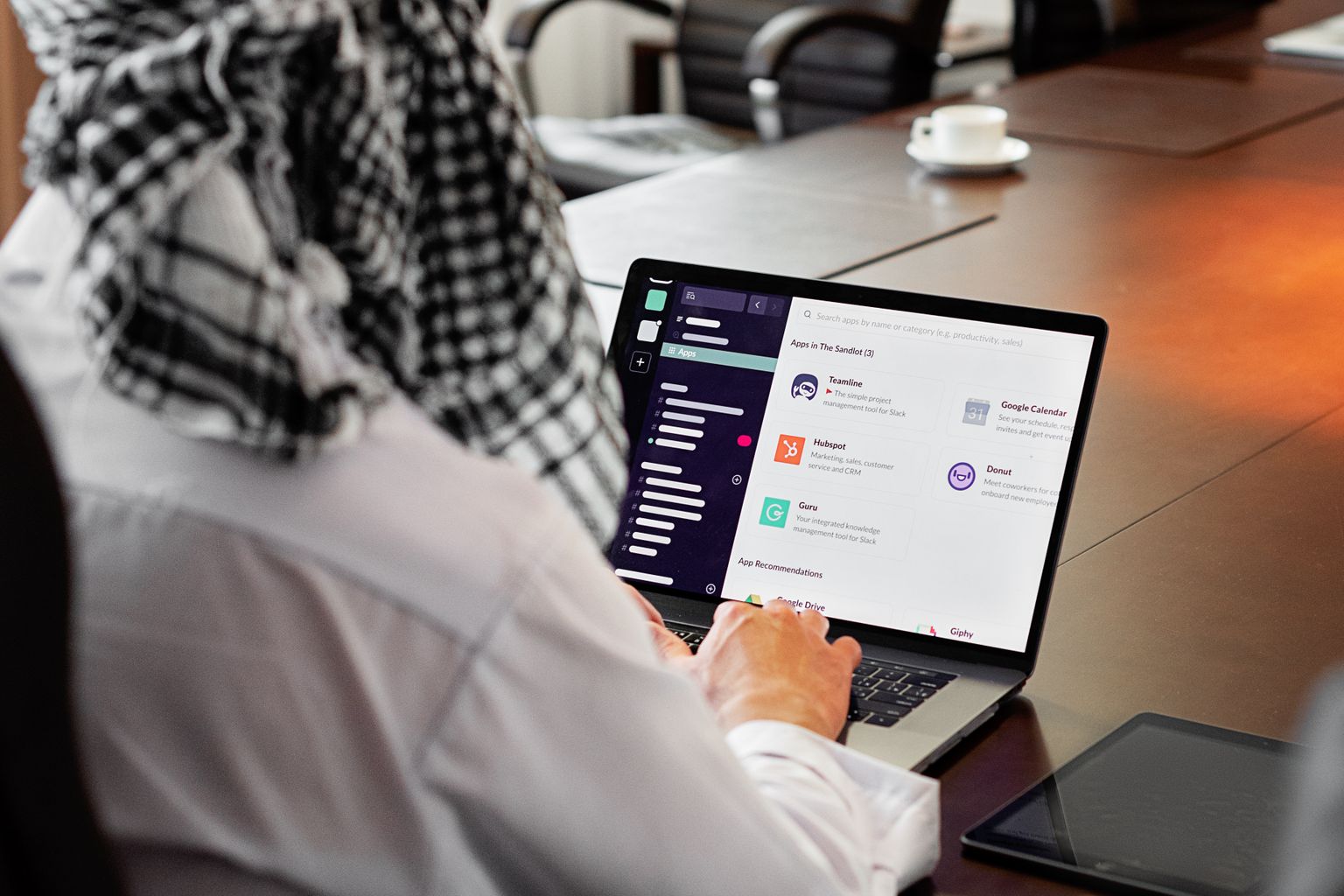
SaaS describes the product and revenue model; B2B and B2C describe the customer. Think of them as two settings you choose at the same time: one for how the software reaches people, one for who pays.
SaaS Is How You Deliver and Charge
Software as a Service (SaaS) is software you host in the cloud. Customers use it in a browser or an app and pay a recurring subscription or a usage fee. The US National Institute of Standards and Technology wrote the definition most people still use in its 2011 cloud computing definition, SP 800-145. It opens: “The capability provided to the consumer is to use the provider’s applications running on a cloud infrastructure.” The customer never manages the servers, storage or updates. You do.
A recurring charge on its own doesn’t make a business SaaS. A coffee subscription box bills monthly too, and what arrives is a bag of beans.
B2B and B2C Are About Who Pays
Business-to-business (B2B) means a company pays from its budget, through a manager’s approval, a company card or an invoice. Business-to-consumer (B2C) means a person pays with their own money for their own use.
The top answer in an r/SaaS thread on choosing B2B put it plainly: who has to approve the purchase changes how you sell. A cheap tool bought by a business still goes through someone’s sign-off.
| Term | What it describes | The question it answers | Example |
|---|---|---|---|
| SaaS | How software is delivered and charged | How do customers get it and pay for it? | Slack (hosted, billed per active user) |
| B2B | A business is the paying customer | Who pays? | Salesforce |
| B2C | An individual is the paying customer | Who pays? | Spotify |
How to Classify a Startup as SaaS, B2B or B2C in 3 Questions
Answer three questions in order (who pays, who uses it, and how you charge) and the label falls out. The first two settle B2B or B2C. The third tells you if you’re SaaS at all.
Question 1: Who Pays for the Product?
Follow the money and see whose account it leaves.
- A business budget: A manager approves it, finance pays an invoice or a company card gets charged. That’s B2B.
- An individual’s own money: Someone pays on a personal card for personal use. That’s B2C.
- A business paying so its customers can use it: The business is your customer, and its customers are the end users. That’s B2B2C.
Founders in r/SaaS add a handy tiebreaker. If your buyer can claim the tool as a business expense, and that’s part of why they buy, you’re closer to B2B or prosumer than to pure B2C.
Question 2: Who Uses It Day to Day?
The payer and the user are often different people. In a B2B tool, employees use it while a manager or IT team signs off. In a B2B2C product, consumers use it while a business foots the bill.
Usage gives you clues when payment is unclear. Shared workspaces, admin roles and team billing point to B2B. One person using the app alone for personal goals points to B2C. In an older r/SaaS thread, a founder building a planning and chat tool for teams asked if they were B2B or B2C, and the top reply was blunt: a collaboration platform for teams inside businesses sells to businesses.
How you sell is the other tell. Demos, sales calls and contracts mean B2B. A one-minute sign-up from an app store or a social ad means B2C or prosumer.
Question 3: How Do You Deliver and Charge?
- Recurring subscription or usage fee for hosted software: You’re SaaS.
- A cut of each transaction between buyers and sellers: You’re a marketplace.
- A one-time sale of a product or licence: You’re e-commerce, D2C or traditional licensed software.
Worked example (an illustration, not a real company): ChairTime builds scheduling software for dental clinics.
- Who pays? The clinic owner, from the practice’s budget. B2B.
- Who uses it? Front-desk staff and dentists every day. Patients get booking reminders but pay nothing, so it stays B2B.
- How does it charge? A monthly fee per clinic location for cloud software. SaaS.
ChairTime is B2B SaaS. If it later added a booking marketplace that took a fee on each patient booking, that new revenue line would be a marketplace model running alongside the SaaS.
How to Classify Startup SaaS vs B2B vs B2C: The Cheat Sheet
Match who pays with how you charge to get your label. Find the row that looks like your startup and read across.
| Who pays | How you charge | Classification | Example |
|---|---|---|---|
| A business | Subscription for hosted software | B2B SaaS | Slack |
| An individual | Subscription for hosted software | B2C SaaS | Duolingo (Super) |
| A business, so its customers can use the product | Subscription plus transaction fees | B2B2C (billed as B2B SaaS) | Shopify |
| An individual first, a team or company later | Free or personal plan, then paid team plans | Prosumer / bottom-up SaaS | Canva, Notion |
| Buyers or sellers, per transaction | Commission or service fee | Marketplace (not SaaS) | Airbnb |
| An individual | One-time product sale | B2C e-commerce or D2C (not SaaS) | Warby Parker |
If two rows fit, pick the one that brings in most of your revenue and name the other as a second channel.
B2B SaaS vs B2C SaaS: What Changes Once You Know Your Type?

Your classification decides your buyer, sales cycle, pricing and the metrics you track. The same product idea, sold to a company or to a consumer, turns into two very different businesses.
| Factor | B2B SaaS | B2C SaaS |
|---|---|---|
| Who decides | A team lead, manager or committee, often with IT and finance | One person |
| Sales cycle | Longer: trials, demos, security reviews, contracts | Short: sign up and pay in one session |
| Pricing model | Per seat or tiered plans, monthly or annual | Personal monthly or annual plans, often with family or student options |
| Onboarding | Demo or sales-led, with admin setup | Self-serve inside the app |
| Churn | Typically lower, because the tool is built into team workflows | Typically higher, because personal budgets get trimmed first |
| Growth channels | Sales outreach, account-based marketing (ABM), content, partnerships | Word of mouth, app stores, paid social, referral loops |
| Main metrics | Annual contract value (ACV), net revenue retention (NRR) | Conversion rate, retention, lifetime value to acquisition cost (LTV/CAC) |
People who have worked on both sides describe the trade in similar terms. A popular r/ProductManagement thread sums up B2B as safer, more stable and slower, and B2C as riskier, faster and more data-driven. In r/sales, reps who moved from consumer products to enterprise SaaS named two real differences: the length of the sales cycle and the number of people involved in each deal.
Once you know you’re B2B, plan a B2B SaaS marketing strategy built for long cycles and several decision-makers. Those longer cycles are also why B2B founders start comparing CRM and sales tools earlier than consumer founders do.
What About Hybrid Models Like B2B2C and Prosumer?
Many startups fall between B2B and B2C.
B2B2C
In business-to-business-to-consumer (B2B2C), a business pays you so its own customers can use what you built. Shopify is the classic case. Merchants pay for a Basic, Grow, Advanced or Plus plan, and shoppers browse and buy in those merchants’ stores without paying Shopify a subscription. White-label apps follow the same pattern, with a business putting its own brand on your software. For pricing and sales, treat B2B2C as B2B, because the business is the one paying.
Prosumer and Bottom-Up SaaS
Prosumer tools win individuals first, usually on a free or personal plan, and then spread into teams that pay. Canva lists Free, Pro Lite and Pro for individuals, plus Business and Enterprise for teams and organizations. Notion’s Free plan is aimed at individuals, with Plus, Business and Enterprise for teams and companies.
Some r/SaaS founders have a name for the buyers in the middle: “B2Professionals”. They’re freelancers and one- or two-person businesses who buy like consumers but use the tool for paid work. If that’s your buyer, price like B2C and build team features early, because that’s where the bigger accounts come from.
Selling to Both Markets
Some products sell personal and business plans side by side. ChatGPT is the clearest example. OpenAI’s ChatGPT pricing page lists Free, Go, Plus and Pro for individuals, and Business and Enterprise for organizations, with Business available from 2 users.
Classify a dual-market startup by its main revenue source, and say openly that the other side is a second channel. “B2C-first, with a growing team plan” tells an investor or a hire far more than “both”.
Is It SaaS, a Marketplace or E-commerce?
If you earn a commission for connecting buyers and sellers, you are a marketplace, not SaaS, even if you have an app. The revenue model decides the label, and the app is only the way people reach you.
- SaaS: Customers pay a recurring fee to use your hosted software. Common mistake: Calling any app with a monthly fee SaaS when the fee really buys content or goods.
- Marketplace: You take a fee from transactions between other people. Airbnb charges service fees when a booking is confirmed, and its service fee help article explains that most hosts are moving to a single fee deducted from their payout. Common mistake: Pitching a marketplace as SaaS because sellers get a dashboard.
- E-commerce or transactional: You sell products, once or on repeat, and keep the margin. Common mistake: Calling a subscription box SaaS.
Plenty of companies mix models. According to the Shopify pricing page, merchants pay a plan fee, pay a fee to accept cards through Shopify Payments, and pay an extra transaction fee if they use a third-party payment provider. Etsy charges sellers a listing fee and a transaction fee on each sale, and also sells an optional Etsy Plus subscription, per its fees and payments policy. When you combine models, lead with the one that earns the most and list the rest after it.
Real Examples: How 12 Well-Known Companies Are Classified
Here is how the 3 questions classify companies you already know. Three of them (Zoom, Netflix and ChatGPT) are marked as debated, because the answer changes with the plan or the definition you use.
| # | Company | Who pays | How it charges | Classification |
|---|---|---|---|---|
| 1 | Slack | Teams and businesses | Per active user, monthly or annual | B2B SaaS |
| 2 | Salesforce | Businesses | Per-user subscriptions | B2B SaaS |
| 3 | HubSpot | Businesses, from solo owners to large teams | Free CRM tools, then paid subscriptions | B2B SaaS (freemium) |
| 4 | Zoom | Individuals and businesses | Free Basic plan, then per-user Pro, Business and Enterprise plans | Debated: Business plans are B2B SaaS, and many individuals use Basic or pay for Pro |
| 5 | Spotify | Individuals | Premium Individual, Student, Duo and Family plans, plus a free ad-supported tier | B2C subscription (streaming) |
| 6 | Netflix | Individual households | Monthly membership | Debated: B2C subscription, usually called streaming media because people pay for shows and films |
| 7 | Duolingo | Individuals and families | Free app, plus Super, Super Family and Max subscriptions | B2C SaaS (freemium) |
| 8 | Canva | Individuals first, then teams | Free, Pro Lite and Pro for individuals; Business and Enterprise for teams | Prosumer SaaS |
| 9 | Shopify | Merchants | Plan subscription plus payment and transaction fees | B2B SaaS (B2B2C) |
| 10 | Airbnb | Hosts and guests, per booking | Service fees on confirmed bookings | Marketplace |
| 11 | Uber | Riders pay per trip, and Uber keeps a share | Per-trip fees | Marketplace (on demand) |
| 12 | ChatGPT | Individuals and businesses | Free plan, individual subscriptions (Go, Plus, Pro), per-user Business and Enterprise plans | Debated: Clearly SaaS, sold as both B2C and B2B |
Look at Spotify and Netflix side by side. Both stream media to individuals and land in the same bucket, while Zoom’s label flips depending on whose card gets charged. Who pays and how they pay decide each row, and the product category plays no part.
B2B vs B2C vs C2C vs D2C: How Do They Differ?
The four terms describe who sells to whom. B2B and B2C name the type of buyer, consumer-to-consumer (C2C) covers individuals selling to each other through a platform, and direct-to-consumer (D2C) covers brands that sell straight to shoppers.
| Model | Who sells | Who buys | Example |
|---|---|---|---|
| B2B | A business | Another business | Salesforce |
| B2C | A business | An individual | Netflix |
| C2C | An individual, through a platform | Another individual | Etsy, eBay |
| D2C | A brand, under its own name | An individual | Warby Parker |
D2C is a type of B2C. The brand makes the product and sells it to you through its own website and stores, with no retailer in the middle.
Why Getting Your Startup Classification Right Pays Off
The label shapes your pricing, your go-to-market, the metrics investors ask about and your pitch.
- Pricing: Business buyers expect seats, tiers and annual contracts. Consumers expect one personal plan they can cancel from their phone.
- Go-to-market: Your first customers come from different places. B2B founders in r/SaaS often describe finding one customer with a painful problem and building around them, while a B2C app needs a channel that reaches thousands of people cheaply.
- Metrics: B2B SaaS dashboards center on recurring revenue and how much existing accounts grow. B2C dashboards track sign-up conversion and how many users stay each month. Showing the right set makes your traction easy to read.
- Fundraising story: A clear label tells an investor which companies to compare you with. Growth benchmarks such as T2D3 were built around SaaS companies, so a marketplace pitched as SaaS gets measured against the wrong yardstick.
Before you commit to a label, validate your SaaS idea with real buyers from that segment. If you’re still choosing what to build, run a few micro SaaS ideas through the three questions and see which buyer each one points to.
Conclusion
SaaS tells you how you deliver and charge, and B2B or B2C tells you who pays, so every startup gets one answer on each axis. Take your idea through the three questions now (who pays, who uses it and how you charge), and you’ll know how to classify startup SaaS vs B2B vs B2C ideas without guessing. Write the label at the top of your pricing page draft and your pitch deck, then test it with real buyers before you build more.
Once the label is clear and the backlog grows, the next call is when to outsource for a SaaS startup and which jobs to keep in-house.
Frequently Asked Questions
Q. Is SaaS considered B2B?
Not always. SaaS is a delivery model, so it can be B2B, B2C or both. Slack is B2B SaaS because teams and businesses pay per active user. Duolingo is B2C SaaS because individuals pay for Super, Super Family or Max. The buyer decides the B2B or B2C part.
Q. Is Netflix a B2C SaaS?
It’s debated. Netflix is B2C and subscription-based, since households pay a monthly membership. Many people call it a streaming or media subscription rather than SaaS, because members pay for shows and films, and the app is how they watch. In a pitch, call it a B2C subscription business.
Q. Is ChatGPT considered SaaS?
Yes. ChatGPT’s paid plans are cloud software sold by subscription. OpenAI sells to both markets: Free, Go, Plus and Pro for individuals (B2C), and Business and Enterprise for organizations (B2B), according to its pricing page. That makes ChatGPT a dual-market SaaS product.
Q. What is the 3 3 2 2 2 rule of SaaS?
It’s a growth benchmark, not a classification rule. Often called T2D3, it means tripling annual recurring revenue (ARR) for two years, then doubling it for three. Battery Ventures General Partner Neeraj Agrawal called it the mantra “triple, triple, double, double, double” in a 2015 Battery Ventures article, mapping a path from $2 million to about $144 million in ARR.
Q. Can a startup be both B2B and B2C?
Yes. Plenty of products sell personal and business plans at once. Classify by the main revenue source and treat the other side as a secondary channel. Prosumer tools are the usual case: individuals start on a personal plan, and their companies later pay for team accounts.
Q. Is every subscription business SaaS?
No. A subscription only describes how often you’re billed. Subscription boxes ship physical goods, and content subscriptions sell access to media, so neither delivers hosted software as the product. SaaS needs both parts: cloud software the customer uses, and a recurring or usage-based charge for it.
Q. Is Shopify B2B or B2C?
Shopify is B2B SaaS, because its paying customers are merchants on Basic, Grow, Advanced or Plus plans. Those merchants use Shopify to sell to consumers, so it’s also described as B2B2C. Shoppers buy from Shopify-powered stores without paying Shopify a subscription.
Q. What is a prosumer SaaS company?
A prosumer SaaS company sells tools that individuals adopt on their own, often on a free or personal plan, which then spread into teams that pay. Canva and Notion work this way, with free plans for individuals and paid Business and Enterprise tiers for organizations.






[…] How to Classify a Startup: SaaS vs. B2B vs. B2C Explained […]